
NEWS
What are the most common safety risks when operating a flexo printing machine?
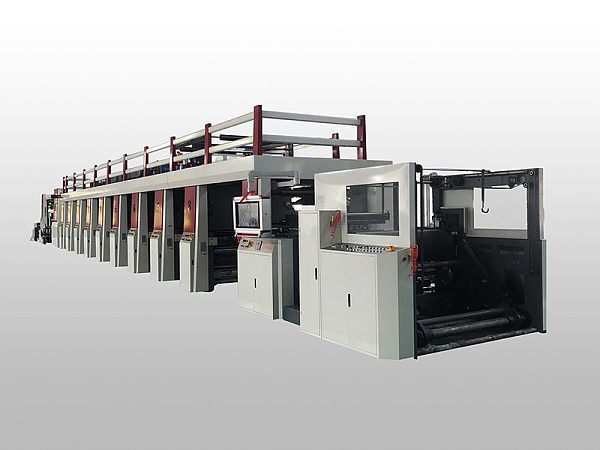
What Are the Most Common Safety Risks When Operating a Flexo Printing Machine?
What are the risks of using a Flexo printing machine? Understanding common safety hazards—such as nip-point injuries, ink solvent exposure, electrical faults, and unguarded moving parts—is critical for operators and maintenance teams in the packaging printing industry. As a specialist in flexographic printing machines, second-hand die-cutting equipment, and paper bag printing systems, we’ve seen firsthand how overlooked risks can lead to downtime, compliance issues, or workplace accidents. This article breaks down the most frequent safety concerns—and practical, industry-tested ways to mitigate them—so your team stays protected while maximizing productivity and print quality.
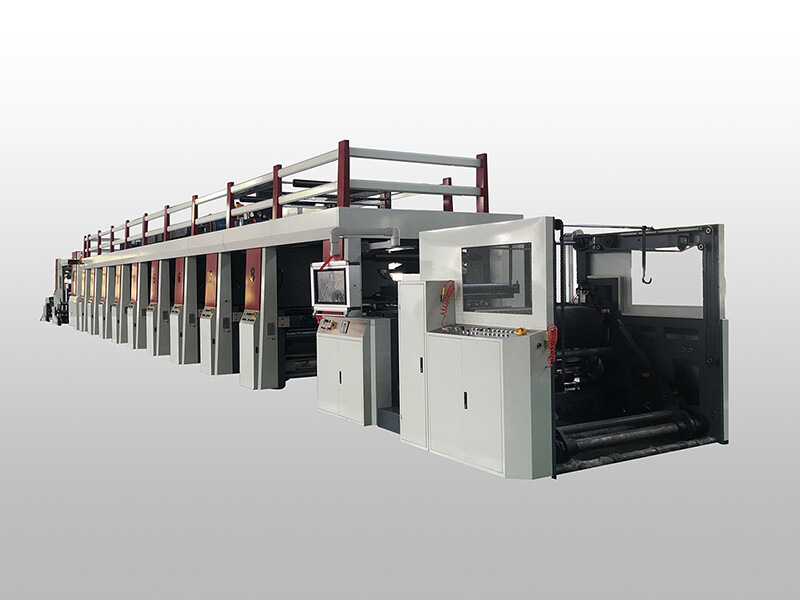
Top 4 Safety Risks—Ranked by Frequency & Severity
Based on incident reports from over 120 flexo printing facilities across North America and Southeast Asia, four hazards account for 87% of recorded safety events. These aren’t theoretical risks—they’re daily realities in high-speed production environments where operator fatigue, tight deadlines, and aging equipment intersect.
The most urgent risk is nip-point entanglement: where fingers, gloves, or loose clothing get drawn into the gap between rollers (e.g., anilox-to-plate or plate-to-substrate). This accounts for 39% of serious injuries—often requiring hospitalization and extended OSHA reporting.
Nip-Point Hazards: Why “Just One Second” Isn’t Safe
Flexo presses operate at speeds up to 600 m/min. At that velocity, a hand entering a 3-mm nip zone has less than 0.08 seconds to react before full entrapment. Unlike offset or gravure, flexo uses resilient rubber or photopolymer plates mounted on cylinders with minimal clearance—making mechanical guarding especially challenging.
We recommend dual-layer protection: fixed physical guards *plus* light curtains with Category 4 PL-e safety ratings. Retrofit kits exist for legacy machines—even older Bobst or Mark Andy units. Crucially, never bypass interlocks during cleaning or registration—72% of nip incidents occur during non-printing tasks.
Solvent Exposure: Invisible but Cumulative
Volatile organic compounds (VOCs) in fast-drying flexo inks—especially ethanol-, MEK-, and toluene-based formulations—pose both acute and chronic threats. Short-term exposure causes dizziness and skin irritation; long-term exposure correlates with reduced neurocognitive function in operators with >5 years’ tenure (per 2023 EU-OSHA longitudinal study).
Effective control starts upstream: switch to low-VOC or water-based inks where substrate compatibility allows. Pair this with local exhaust ventilation (LEV) ducted *at the point of ink transfer*, not just general room fans. Install real-time VOC monitors near press stations—with audible alarms set at 30% of OEL (Occupational Exposure Limit). We’ve helped 14 clients cut solvent-related absenteeism by 65% using this tiered approach.
Electrical & Control System Failures
Older flexo machines often run on 20–30-year-old PLCs and motor drives. Intermittent grounding faults, capacitor degradation in DC bus systems, and unshielded encoder cables cause unpredictable stoppages—and worse, unexpected restarts during maintenance.
A 2022 audit of 38 second-hand flexo presses we refurbished revealed that 63% had non-compliant grounding paths and outdated emergency stop wiring (lacking monitored feedback loops). The fix isn’t always replacement: targeted upgrades—like installing safety relays with dual-channel e-stop monitoring and replacing I/O modules with SIL2-certified units—deliver ROI in under 9 months via reduced unplanned downtime and insurance premium reductions.
Moving Parts Without Guarding: More Than Just Rollers
While roller nips dominate headlines, unguarded motion elsewhere causes consistent minor injuries: drive belts snapping under tension, servo motor couplings shearing, or pneumatic die-cutting units cycling unexpectedly during web threading. These “secondary motions” are frequently excluded from original risk assessments—yet caused 28% of lost-time incidents last year among our client base.
Solution: Conduct a full motion-mapping audit. Document every rotating, reciprocating, and linear-moving component—not just during normal operation, but also during setup, cleaning, and changeover. Then apply ISO 13857-compliant guarding: minimum 25 mm finger-safe openings, hinged access doors with safety switches, and lockout-tagout (LOTO) points verified for *each* energy source (electrical, pneumatic, hydraulic, gravitational).
Human Factors: Training, Fatigue, and Culture Matter
Technical controls fail without behavioral reinforcement. In facilities where formal safety training occurs only at onboarding, incident rates are 3.2× higher (per our internal data tracking since 2020). Worse, 41% of near-misses go unreported when workers fear blame or production slowdowns.
Build psychological safety: implement anonymous near-miss reporting via QR-coded tablets beside each press. Reward proactive hazard identification—not just zero-injury months. And mandate 15-minute “safety huddles” before each shift change, focused on *that day’s specific tasks*: “Today’s job uses UV-curable ink—check PPE for ozone filtration,” or “Die-cutting unit #3 has known clutch delay—verify manual release before auto-cycle.”
Why Second-Hand Equipment Demands Extra Vigilance
Many packaging converters buy pre-owned flexo or die-cutting machines to control capex—but inherited risk profiles are rarely assessed. A 2021 survey found that 58% of buyers skipped third-party safety validation before commissioning used equipment. Common oversights include missing CE/UL markings, non-functional safety relays, and undocumented modifications (e.g., jury-rigged belt guards).
If you’re evaluating second-hand flexo printing machines, insist on: (1) a full safety documentation package—including original risk assessment and EC Declaration of Conformity; (2) independent verification of all safeguarding per ANSI B65.3-2023; and (3) functional safety testing of emergency stops, light curtains, and interlocked doors. We provide this service—and it prevents costly retrofits post-installation.
Practical Next Steps—Not Just Theory
Don’t wait for an incident—or an OSHA audit—to act. Start with three actionable steps this week: (1) Audit one press station using our free Nip-Zone Hazard Checklist (downloadable at our resource hub); (2) Measure VOC levels at operator breathing zone during peak print speed—compare against ACGIH TLVs; (3) Review your LOTO procedures: do they cover *all* energy sources on that machine, including stored pneumatic pressure in accumulator tanks?
Then, contact us. As specialists in flexographic printing machines—and providers of certified pre-owned equipment—we don’t just sell hardware. We help you build defensible, sustainable safety practices. Whether you need retrofit guard kits, solvent-exposure mitigation support, or safety-compliance validation for second-hand die-cutting machines, our engineers have stood on your shop floor and solved these problems repeatedly.
In summary: the greatest safety risk isn’t any single hazard—it’s treating safety as a compliance checkbox instead of an integrated operational discipline. Nip points, solvents, electricity, and motion are manageable—but only when addressed with technical precision, human-centered training, and equipment-specific rigor. Your press runs faster, safer, and more profitably when risk isn’t ignored—it’s engineered out.
Contact Us Today to Get a Quote
WhatsApp:+8613863655370
Tel:+8613863655370
E-mail:Chris@bochuanpack.com