
NEWS
Paper Bag Flexo Printing Machine Price: Cost Drivers Explained
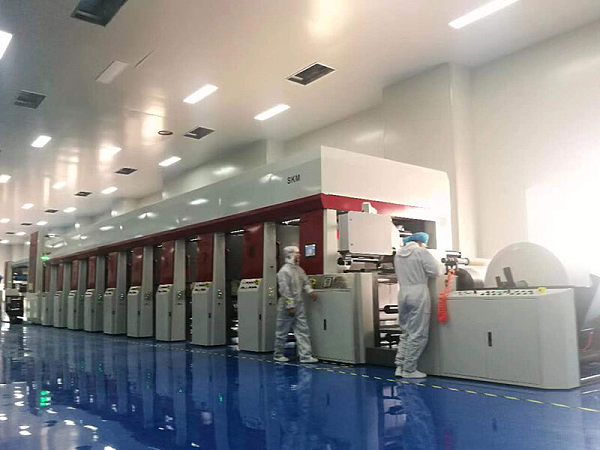
Evaluating the paper bag flexo printing machine price requires more than comparing quotations. For financial decision-makers, the real value lies in understanding how configuration, automation level, printing width, production speed, and after-sales support affect total investment and long-term returns. This guide explains the main cost drivers behind paper bag printing equipment, helping you make a smarter and more budget-conscious purchasing decision.
What Financial Approvers Really Need to Know About Price
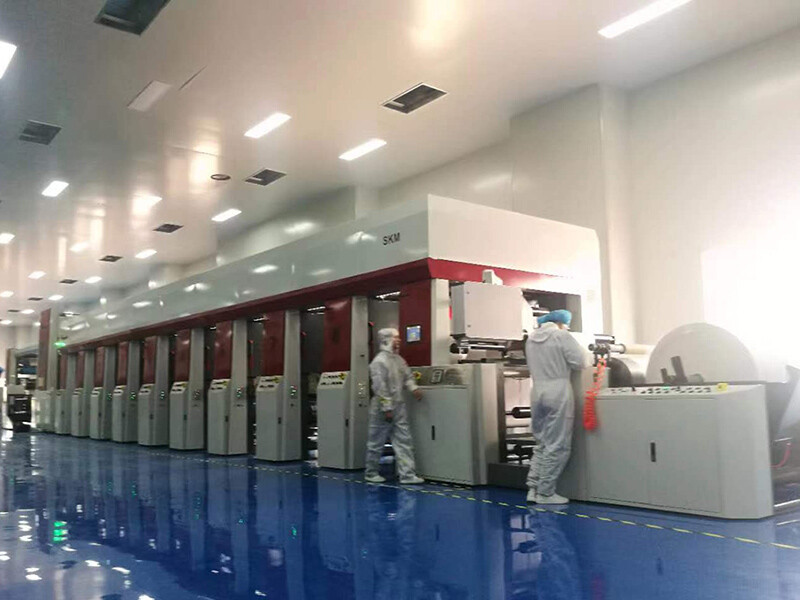
When buyers search for paper bag flexo printing machine price, they rarely want a single universal number. They want a practical way to judge whether a quoted price is justified.
For financial approvers, the key question is not only how much the machine costs today. It is how the investment performs across productivity, waste control, maintenance, and revenue support.
In most cases, price differences come from configuration depth rather than brand name alone. Two machines may look similar on paper, yet deliver very different operating costs and output quality.
A low initial quotation can become expensive if it causes slower changeovers, unstable registration, more labor dependency, or higher material waste. That is where total cost of ownership matters most.
What Is the Typical Price Range and Why Is It So Broad?
The paper bag flexo printing machine price can vary widely depending on machine format, color units, web width, drying system, automation features, and country of manufacture.
Entry-level models for basic printing jobs usually cost less because they offer limited automation, lower speed, and simpler control systems. They may fit companies with stable, low-complexity production needs.
Mid-range machines often command higher prices because they balance speed, print consistency, and operational flexibility. For many commercial users, this range delivers the most practical return profile.
High-end machines carry premium pricing due to servo controls, automatic registration, fast job switching, defect reduction systems, and stronger support packages. These features often reduce hidden operating expenses over time.
That is why price alone can mislead a finance team. The better comparison is cost per usable output, supported by labor savings, uptime, and quality stability over several years.
Which Machine Specifications Have the Biggest Impact on Cost?
Among all technical factors, the number of printing colors has a clear impact on price. More color stations mean a higher machine cost, but they also expand customer order capability.
Printing width is another major cost driver. Wider machines can process larger formats and boost output flexibility, yet they require stronger structure, more material control precision, and higher power demand.
Production speed strongly affects pricing as well. Machines built for higher speeds need better mechanical balance, tighter registration systems, and more durable components, all of which raise capital cost.
Drying and curing systems influence both purchase price and future utility expenses. Efficient drying supports stable output, but the system design should be assessed against local energy costs and production volume.
Control architecture also matters. Basic manual adjustment lowers upfront cost, while advanced servo-driven operation usually improves consistency and reduces operator dependence, especially across repeat jobs.
How Automation Changes the Investment Case
Automation is often one of the biggest reasons two quotations differ sharply. From a finance perspective, automation should be evaluated as a labor, waste, and uptime investment rather than a luxury option.
Automatic tension control, color registration, and job memory reduce setup time. If your plant handles frequent order changes, these functions can improve productive machine hours significantly.
Automatic washing or rapid plate change systems also influence the paper bag flexo printing machine price. However, they may pay back quickly where labor costs are high or downtime is expensive.
For companies with less experienced operators, automation can reduce performance variation between shifts. That consistency has financial value because it lowers rework, protects delivery schedules, and improves customer retention.
On the other hand, highly automated equipment may be unnecessary for plants with simple, long-run jobs and stable staffing. Matching features to actual order structure is essential for sound capital allocation.
How to Evaluate Price Through Total Cost of Ownership
Financial approvers should build a total cost of ownership model before approving any machine purchase. This approach gives a clearer answer than comparing supplier quotations line by line.
Start with the acquisition cost, including freight, installation, commissioning, training, import duties, and initial spare parts. These items are often excluded from headline pricing and distort budget planning.
Then estimate operating costs such as energy use, ink consumption, plate changes, routine maintenance, consumables, and labor per shift. A cheaper machine may perform worse across these recurring costs.
Next, measure output value by usable production volume, not theoretical speed. The true benchmark is how many saleable paper bags the machine can print within real working conditions.
Downtime risk must also be priced in. Delayed parts supply, poor technical support, or unstable electronics can turn a low capital expense into a high operational burden within the first year.
What Questions Should a Finance Team Ask Suppliers?
Before approving a purchase, finance teams should request more than a quotation. They should ask suppliers for performance assumptions that can be tested and compared across competing offers.
Ask for actual running speed under your expected substrate range, not only maximum speed in ideal conditions. Real throughput is more useful for return calculations than brochure-level specifications.
Request estimated waste levels during startup, color adjustment, and job changeover. Waste affects ink, paper, labor, and delivery reliability, making it a direct cost factor rather than a technical detail.
Clarify warranty scope, spare parts availability, service response time, and remote troubleshooting capability. A stronger support package may justify a higher upfront figure if it protects continuity.
It is also useful to ask for customer references in similar production environments. Matching industry use cases provide better guidance than generic performance promises from sales materials.
When Does a Higher Price Make Financial Sense?
A higher machine price makes sense when it removes a bottleneck, enables better margins, or lowers structural operating costs. The decision should be tied to measurable business outcomes.
If your company serves brand owners with tighter quality expectations, better registration and print stability can justify premium equipment. Missed color consistency can damage customer trust and future order value.
If the plant faces labor shortages, investing in a more automated model may reduce staffing pressure and training dependency. That improves resilience, not only efficiency.
If order volume is growing, a faster machine may protect revenue opportunities that a basic model cannot support. Lost capacity is also a cost, even if it is not listed in a quotation.
For some converters, broader capability matters too. A supplier offering adjacent equipment, such as Wide web printing machine, may be better positioned to support future expansion planning.
Should You Consider Used Equipment to Control Budget?
For budget-sensitive projects, second-hand equipment can be a valid option, but only when technical condition and refurbishment quality are verified carefully. Low purchase cost alone is not enough.
Used machines may shorten payback periods if production demand is stable and print requirements are not highly complex. They can be suitable for secondary lines or less demanding order profiles.
However, finance teams should examine hidden risks closely. These include parts obsolescence, weaker electronic systems, inconsistent maintenance history, and longer installation adjustment periods.
The best used-machine purchases are backed by inspection records, test-running data, replaced wear parts, and clear post-sale support commitments. Without these, savings may disappear quickly.
If the supplier also understands broader printing equipment categories, including solutions like Wide web printing machine, that can indicate stronger technical depth and service capability.
Common Pricing Mistakes That Lead to Poor Approval Decisions
One common mistake is selecting the lowest quotation without normalizing the scope. Some offers exclude installation, training, spare parts kits, or software functions that others include.
Another mistake is overbuying. A machine with excessive speed or advanced automation may look impressive, but it weakens return if your job mix cannot use those capabilities.
Finance teams also sometimes rely on theoretical payback models that assume perfect uptime and full capacity utilization. Conservative assumptions usually produce better decisions.
Ignoring operator skill level is another risk. A technically advanced machine may underperform if local staffing cannot use it well or if training support is too limited.
Finally, some buyers underestimate service logistics. The cost of delayed maintenance can exceed the original price difference between two suppliers, especially in time-sensitive production environments.
A Practical Framework for Comparing Quotations
To compare offers effectively, create a structured scorecard that includes capital cost, expected output, waste rate, labor requirement, support quality, and expansion flexibility.
Assign weightings based on your business priorities. A fast-growth plant may value speed and scalability more heavily, while a mature operation may prioritize reliability and low maintenance exposure.
Use a three-year or five-year view rather than a purchase-month view. This helps highlight the financial impact of recurring operating variables that matter more than initial discount levels.
It is also helpful to model best-case, expected-case, and conservative-case returns. This shows how sensitive the investment is to volume changes, staffing conditions, and downtime risk.
With this framework, the paper bag flexo printing machine price becomes easier to interpret. The goal is not to buy the cheapest machine, but the most financially appropriate one.
Conclusion: Judge Price by Business Value, Not Quote Alone
For financial decision-makers, the smartest way to evaluate a paper bag flexo printing machine price is to connect machine cost with operational reality and expected return.
Configuration, automation, width, speed, support, and serviceability all shape the true investment outcome. A higher price may be justified when it improves uptime, lowers waste, and supports stronger customer delivery.
The best purchase decisions come from comparing total ownership cost, not just invoice figures. When finance teams ask better questions, they gain a clearer basis for approval and risk control.
In short, price matters, but value matters more. A disciplined evaluation process helps ensure that the chosen machine fits both production needs and long-term financial goals.
Contact Us Today to Get a Quote
WhatsApp:+8613863655370
Tel:+8613863655370
E-mail:Chris@bochuanpack.com