
NEWS
How production scale impacts high-speed flexographic printing machine price
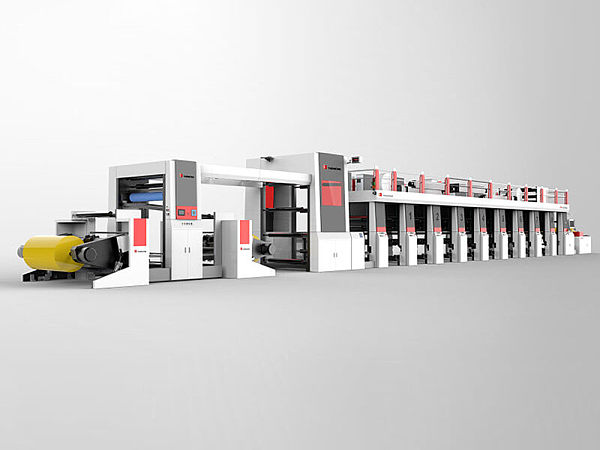
Understanding How Production Scale Influences High-Speed Flexographic Printing Machine Price
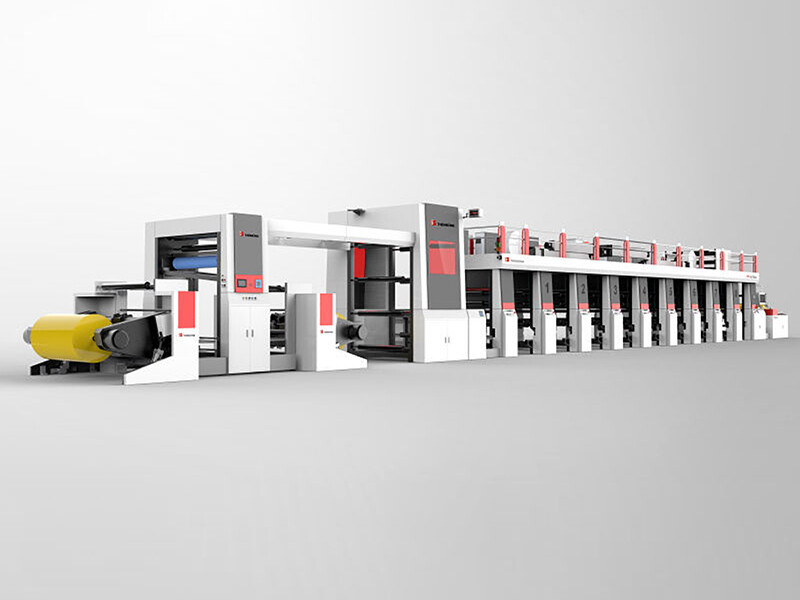
Understanding how production scale influences high-speed flexographic printing machine price is crucial for anyone involved in packaging and printing. Whether you are evaluating a high speed milk packet printing machine, comparing Flexo printing machine options, or analyzing milk packet printing machine price, production volume directly shapes cost efficiency, equipment configuration, and ROI. This introduction helps decision-makers and technical experts assess how scaling impacts both investment and operational value in modern printing solutions.
1. The Relationship Between Production Scale and Equipment Cost Structure
In the flexographic printing industry, production scale—defined by the number of impressions per hour, monthly output volume, or total machine utilization rate—is one of the most decisive cost factors. A small-scale facility might handle 50,000–100,000 impressions per month, while a high-volume converter can exceed 2 million impressions within the same period. Such variations directly influence both machine specifications and unit price.
When output demand increases, the printing equipment must maintain precision at higher speeds. This typically requires servo-driven controls, tension management accuracy within ±0.2N, and printing register precision around ±0.1mm. These technical upgrades increase manufacturing costs by approximately 15–25%, thus raising the machine price proportionally.
At larger scales, however, cost per product unit decreases because fixed depreciation, labor, and maintenance are distributed over more printed items. Many manufacturers observe that for every 200% increase in production scale, per-unit equipment cost may drop by nearly 30% over a 3-year period, considering higher run efficiency and reduced downtime.
This relationship highlights a key principle: initial investment grows with scale, but the total cost of ownership and cost per print decline over time. Therefore, assessing scale alignment is critical before purchasing a high-speed flexographic press.
Common Cost Elements in Scaling
Hardware upgrades: servo motors, electronic line shafts, and quicker plate change systems
Automation software integration: register control, viscosity regulation, ink circulation
Maintenance complexity: downtime per cycle extending from 2 hours to 5 hours for larger systems
Energy consumption: typically increases by 12–20% in high-speed operations
2. Technical Configuration Differences Across Production Scales
The technical configuration of a flexographic machine must be tailored to match production scale. Small and medium converters usually favor CI (Central Impression) flexo presses with 4–6 color decks, designed for print widths of 600–1000mm. By contrast, large-scale facilities often require modular presses featuring 8–10 colors, print widths up to 1600mm, and a speed range of 150–400 meters per minute.
The upgrade from entry-level to high-speed tier involves enhancements in drying systems (e.g., IR to hot air tunnel), ink delivery (pneumatic to enclosed chamber doctor blade), and web handling (from manual to automatic tension control). These adjustments ensure consistent performance at higher throughput levels.
3. Economic and Operational Efficiency at Scale
The economic return of scaling production depends on operational efficiency metrics such as downtime ratio, waste percentage, and output per shift. In flexographic printing, every 1% increase in uptime can yield an additional 15,000–20,000 usable impressions per month on average for mid-range equipment.
Larger setups usually achieve efficiency gains via integrated workflows: faster plate change (≤5 minutes), automatic viscosity control, and digital tension feedback loops. These upgrades boost line efficiency to 90–95%, while small presses often remain around 70–80%. Over a 5-year machine life, this difference can represent hundreds of production hours saved.
For procurement officers and project managers, understanding operational data enables more precise ROI forecasts. A high-speed flexographic printing line might cost 40% more upfront but reach payback in 18–24 months, whereas a lower-end line could take 36–48 months depending on job mix and output frequency.
4. Choosing the Right Flexographic Machine for Your Scale
Selecting a flexographic printing machine should begin with a clear mapping of production expectations, target markets, and product categories. Procurement staff should compare at least four key dimensions: print volume, material types, printing width, and automation needs. For example, packaging manufacturers producing laminated film and kraft paper simultaneously may require a hybrid press capable of handling a tension range of 2–25N.
A structured evaluation approach helps quantify decision accuracy and minimizes the risk of underperforming equipment. Below is a shortlist of selection checkpoints used by technical evaluators.
Expected monthly throughput: verify alignment within 100,000–2,000,000 impressions.
Substrate compatibility: confirm tolerance for PE, BOPP, paper, and aluminum film.
Energy efficiency rating: seek systems consuming ≤10kWh per hour at peak output.
Automation level: prioritize auto-register and closed-loop tension control for volumes ≥1 million.
Maintenance requirement: target maintenance intervals ≥1,000 operating hours.
When scaling, it is essential to plan spare parts inventory and aftersales support. Vendors who can guarantee 48-hour response cycles and 95% spare part availability typically ensure more stable production continuity, crucial for continuous packaging operations.
5. Implementation Planning and Long-Term Maintenance
After selecting an appropriate printing machine, companies should develop an implementation roadmap including installation, training, trial runs, and preventive maintenance. Standard commissioning for a mid-range machine typically takes 7–15 working days. For a large servo press, the full setup and calibration can extend to 3–4 weeks depending on facility readiness.
Maintenance planning should be integrated into production scheduling. Lubrication frequency, roller alignment inspections, and ink system cleaning should be executed every 500–1000 operating hours. Performance audits every 6 months help keep defect rates below 1.5% and maintain stable color consistency.
An organized implementation ensures consistent output quality and maximizes equipment lifespan—typically 8–12 years for modern flexographic presses. Enterprises investing in second-hand die-cutting machines or auxiliary finishing lines should also align those systems with their primary flexo line’s format and speed to prevent workflow bottlenecks.
Five-Step Integration Workflow
Site evaluation and utility setup (power, air, exhaust)
Machine delivery, alignment, and dry run tests
Operator training and parameter calibration
Trial production and print quality verification (ΔE ≤ 2.0)
Preventive maintenance scheduling and digital documentation
6. FAQ: Common Questions on Production Scale and Pricing
How does scaling up affect the price of consumables?
As print scale increases, ink and plate usage efficiency improve. Bulk ink procurement often saves 5–10% on cost, and plate usage per print run decreases by about 15%. However, setup waste might initially increase until process control stabilizes.
Are second-hand machines suitable for scaling operations?
For moderate expansion or pilot production, second-hand flexographic or die-cutting machines are viable. Their prices are typically 40–60% lower than new ones, though users should verify mechanical tolerance (<±0.15mm) and remaining service life before acquisition.
What is the usual lead time for a custom large-scale flexo press?
Custom configurations with 8–10 colors and servo automation require a lead time of approximately 10–14 weeks, including factory acceptance testing and user calibration. Standard 6-color lines may be delivered within 5–7 weeks.
How to forecast ROI when scaling up printing capacity?
Combine production rate increase (target ≥30%), cost reduction per impression (target −20%), and operational uptime (target ≥90%). Using these metrics, procurement teams can project total return achievable within 18–24 months under stable order flow.
Conclusion and Next Steps
Production scale profoundly impacts both the price and the profitability of high-speed flexographic printing machines. Larger capacity means higher upfront cost but faster ROI through throughput optimization and reduced per-unit expenditure. Evaluating scale in tandem with machine configuration, maintenance, and workflow integration ensures precise investment decisions for packaging converters, label producers, and paper bag manufacturers alike.
For organizations considering expansion or equipment upgrades, a thorough production scale analysis is the first step toward efficient procurement. Contact our team to receive tailored recommendations on flexographic printing machines, second-hand die-cutting machines, and paper bag printing systems designed for your specific output goals. Get in touch today to plan your next production upgrade with confidence and operational clarity.
Contact Us Today to Get a Quote
WhatsApp:+8613863655370
Tel:+8613863655370
E-mail:Chris@bochuanpack.com