
NEWS
Is a Flexo Printing Machine a Practical Choice for Small Runs?
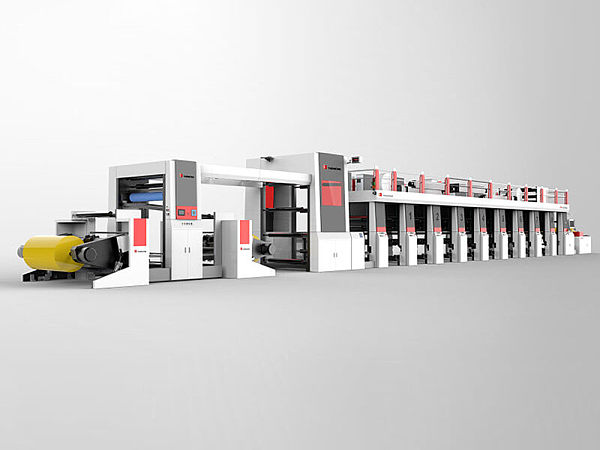
For business decision-makers evaluating cost, flexibility, and output quality, one key question stands out: Is Flexo printing machine suitable for small businesses? In packaging printing, the answer depends on run length, setup efficiency, and long-term production goals. From modern flexographic printing machines to reliable second-hand equipment, understanding where flexo fits can help companies make smarter, more profitable investment decisions.
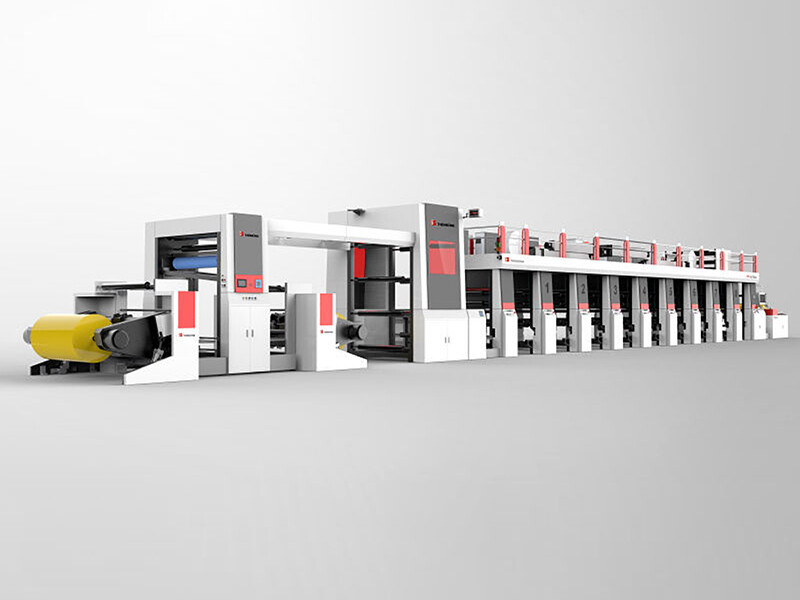
In most cases, a flexo printing machine can be a practical choice for small runs, but not in every situation. The right answer depends less on the label “small run” itself and more on what a company is printing, how often jobs repeat, how many colors are required, what substrates are involved, and whether the business is planning for growth. For some companies, flexo offers a strong balance of speed, consistency, and unit cost. For others, setup expense and plate preparation can make short jobs less attractive than digital alternatives.
That is why the better question is not simply whether flexo works for small businesses, but when it works well enough to justify the investment. For decision-makers in packaging printing, this article focuses on the practical factors that shape that decision: cost structure, production efficiency, quality expectations, equipment options, and the business scenarios where flexographic printing machines make the most sense.
What decision-makers really need to know before choosing flexo for small runs
When executives and owners evaluate printing equipment, they are usually not looking for a theoretical comparison. They want to know whether a machine will help them win orders, control costs, maintain quality, and avoid becoming trapped in the wrong production model. That is the real search intent behind the question, “Is Flexo printing machine suitable for small businesses?”
For small-run work, the biggest concern is the relationship between setup cost and output volume. A flexographic printing machine typically requires plates, machine setup, registration adjustment, and substrate preparation before production becomes efficient. If every job is unique and volumes are very low, those preparation steps can weaken the economics. But if short jobs repeat regularly, or if multiple orders share similar specifications, flexo becomes much more attractive.
Decision-makers also care about reliability. A lower print cost per unit means little if the machine causes downtime, wastes material, or requires hard-to-find parts. This is especially relevant when evaluating second-hand die-cutting machines or used flexographic systems alongside new equipment. A lower purchase price can improve return on investment, but only if the equipment is stable and supported properly.
Is a flexo printing machine practical for small runs? The short answer
Yes, a flexo printing machine can be practical for small runs when the business has repeat packaging jobs, standardized materials, moderate color requirements, and a need for faster production than digital equipment can economically provide. It is especially practical when the company expects short runs today but medium-volume repeat orders tomorrow.
However, flexo is usually less practical for ultra-short, highly customized work with frequent design changes and no order repetition. In those cases, digital printing often wins because it eliminates plate costs and reduces setup time. That said, many companies make the mistake of choosing based only on the smallest current orders, without considering future production mix.
If a company serves food packaging, paper bags, retail packaging, labels, or other repeat-format products, flexo can still be an excellent investment, even if many jobs start small. The machine becomes more valuable as the order base stabilizes and repeat work grows. For this reason, small businesses with expansion plans often find flexo more practical than they first assumed.
Where flexo performs well in small-business packaging operations
Flexographic printing is particularly strong in packaging environments where substrate versatility matters. It can print on paper, film, corrugated materials, and various packaging stocks. For businesses that produce paper bags, flexible packaging, or simple branded packaging lines, this flexibility can create a strong operational advantage.
Another area where flexo performs well is repeatability. Once plates are made and settings are documented, recurring jobs can be reproduced with consistent color and layout. For a business supplying chain stores, food brands, industrial packaging customers, or wholesale buyers, consistency is often more important than the ability to print one-off designs instantly.
Speed is also a major benefit. While setup may take time, flexo can run efficiently once production starts. If a business handles many short-to-medium orders in the same week, machine speed can offset setup costs over multiple jobs. This is why a flexographic printing machine is often more suitable for structured production environments than for purely custom print shops.
Small businesses that operate with a narrow product range may gain even more value. For example, if a company prints paper bags in common sizes with recurring artwork, flexo can deliver lower long-term production cost and stable quality. In these conditions, the answer to “Is Flexo printing machine suitable for small businesses?” is often yes.
When flexo is not the best choice for short runs
Flexo is not ideal for every small-run scenario. If the business mainly handles one-time promotional packaging, seasonal graphics with limited repetition, or custom designs for small brands that reorder unpredictably, the economics may not work. Plate creation, color matching, and setup can become too expensive relative to order size.
It can also be less suitable when turnaround time is extremely tight and artwork changes happen daily. Digital systems often perform better in those environments because they reduce preparation steps. If your sales model depends on same-day approvals, immediate design changes, and very low-volume jobs, flexo may create workflow bottlenecks.
Another limitation is complexity. Highly detailed graphics, frequent versioning, and variable data are not always ideal for traditional flexo workflows. Businesses with those needs should be careful not to invest in a production method that solves yesterday’s problem but limits tomorrow’s service model.
The real cost question: purchase price is only one part of the decision
Many buyers focus first on the machine price, but decision-makers should look at total cost of ownership. A flexographic printing machine involves more than the initial purchase. You must also consider plates, ink systems, operator skill, maintenance, setup waste, spare parts, energy use, and floor space.
That said, flexo can still be cost-effective because its operating economics improve as repeat jobs increase. The setup cost is front-loaded, but once jobs are standardized, the per-unit cost often drops significantly. For companies trying to improve margins on repeat packaging lines, this can be a major advantage over technologies with lower setup costs but higher running costs.
Second-hand equipment deserves serious consideration here. A well-maintained used machine can lower entry cost without eliminating the core production benefits of flexo. For a growing business, this may be the most practical path: reduce capital expenditure, test market demand, and scale with less financial pressure. The key is making sure the machine has been properly inspected and that technical support is available.
In other words, small businesses should not ask only, “Can we afford this machine?” They should ask, “Will this machine improve our cost structure over the next three to five years?” That is the more strategic way to evaluate suitability.
How to judge whether your run length is “too small” for flexo
There is no universal run-length threshold that automatically makes flexo right or wrong. What matters is the combination of setup time, order frequency, substrate type, color count, and repeat business. A 2,000-piece job may be too small for one company and perfectly acceptable for another, depending on workflow efficiency and customer mix.
A useful approach is to break jobs into three categories: one-time custom work, short repeat orders, and scalable repeat production. One-time custom work usually favors digital. Short repeat orders may still work with flexo if plate costs can be reused across future orders. Scalable repeat production is where flexo often becomes strongest.
Decision-makers should also calculate waste tolerance. If setup consumes too much material relative to the finished order, profitability suffers quickly. But modern machines with better registration control and faster changeover can reduce this problem. This is why newer flexographic printing machines, or high-quality refurbished units, may support shorter runs more effectively than older systems.
The practical takeaway is simple: small run length alone does not disqualify flexo. Unpredictability is often the bigger issue. If your small orders are repetitive and operationally controlled, flexo may perform better than expected.
Quality expectations: can flexo meet the standard small businesses need?
For most packaging applications, yes. Modern flexo technology has improved substantially in print quality, registration, and color consistency. For paper bags, retail packaging, shipping-related packaging, and many branded commercial applications, flexo quality is more than adequate and often highly competitive.
Business buyers should define quality in commercial terms, not just technical ones. The real question is whether the print quality supports brand image, customer expectations, and selling price. In many packaging segments, the answer is clearly yes. A company does not need premium decorative printing for every product line.
Where caution is needed is in highly detailed photographic reproduction or luxury-brand packaging with demanding visual standards. If the company’s core value proposition depends on top-tier image complexity in very short runs, flexo may not always be the best standalone option. But for a large share of practical packaging work, it delivers a very strong balance of quality and production efficiency.
Should a small business buy new or consider second-hand equipment?
This is often one of the smartest decision points in the entire process. A new flexographic printing machine offers updated controls, better automation, stronger energy efficiency, and potentially shorter setup times. For businesses planning aggressive growth, new equipment may create a stronger long-term foundation.
At the same time, second-hand equipment can be a very practical choice for companies entering flexo for the first time. If the machine is mechanically sound and well matched to the intended application, it can reduce investment risk while still giving the company production independence. This matters for businesses that want to bring outsourced printing in-house or add packaging capability without taking on excessive debt.
The same logic applies to related equipment such as second-hand die-cutting machines. Packaging production is rarely about printing alone. Finishing, cutting accuracy, workflow continuity, and maintenance support all affect profitability. Sometimes the best investment is not the most advanced machine, but the most balanced production line for your current order mix.
Before purchasing used equipment, buyers should check maintenance history, wear parts, registration stability, electrical condition, compatibility with intended substrates, and access to support. A low-priced machine that cannot hold consistent output is not a bargain. A properly refurbished machine with proven performance often is.
A simple decision framework for business leaders
If you are evaluating whether flexo is right for your business, start with five practical questions. First, do you have repeat jobs or mainly one-off orders? Second, are your substrates standardized or highly variable? Third, do your customers value low unit cost on recurring orders? Fourth, can your team manage setup and production workflow effectively? Fifth, are you investing only for today, or for the next stage of business growth?
If the answers point toward repeatability, standardization, and scalable packaging demand, flexo is likely worth serious consideration. If the answers point toward constant customization, low volume, and daily artwork change, digital or hybrid production may be more suitable.
It is also helpful to review your outsourcing cost. Many small businesses underestimate how much margin they lose by outsourcing packaging print jobs. If your current external print spend is high, bringing production in-house with the right machine may improve lead time, cost control, and customer responsiveness, even if individual runs are not large.
In this context, asking “Is Flexo printing machine suitable for small businesses?” becomes less about company size and more about operating model. A small business with disciplined repeat production may be better suited to flexo than a larger company with chaotic custom demand.
Final verdict: when flexo is a smart investment for small-run packaging
A flexo printing machine is a practical choice for small runs when those runs are part of a repeatable packaging business, not just isolated low-volume jobs. It becomes especially attractive when the company works with paper bags, standardized packaging formats, recurring brand orders, or customers who value stable quality and competitive unit cost.
For business decision-makers, the strongest reason to choose flexo is not simply output speed. It is the combination of consistency, scalability, substrate flexibility, and better long-term economics for repeat production. Newer machines and well-selected second-hand equipment can both support this goal, depending on budget and growth stage.
If your operation is driven by one-off customization and ultra-short lead times, flexo may not be the first choice. But if your goal is to build a more efficient packaging production model with room to grow, flexographic printing machines deserve serious attention. The most practical decision comes from matching the machine to your order pattern, not from assuming that “small business” automatically means “small technology.”
In short, yes, flexo can be suitable for small businesses. The real issue is whether your jobs are repeatable enough, structured enough, and profitable enough to let the technology show its strengths. When those conditions are in place, flexo is not only practical. It can be a strategic advantage.
Contact Us Today to Get a Quote
WhatsApp:+8613863655370
Tel:+8613863655370
E-mail:Chris@bochuanpack.com