
How to Choose an Automatic Corrugated Box Pre-Printing Machine for High-Volume Orders
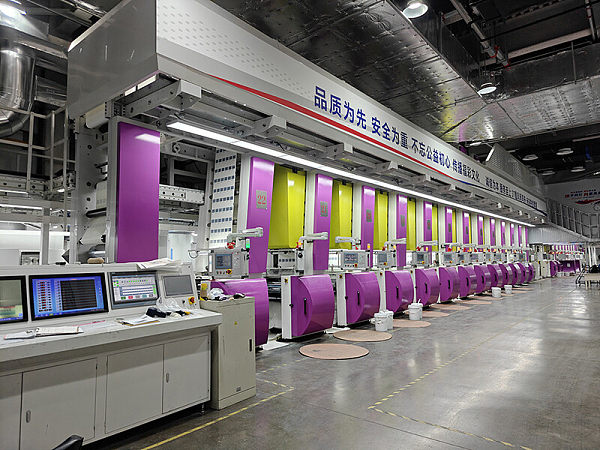
High-volume carton production leaves little room for equipment decisions based on headline speed alone. An Automatic corrugated box pre-printing machine has to hold registration across long runs, adapt to board variation, and keep downtime predictable. In packaging printing, the better choice is usually the one that balances print stability, automation depth, serviceability, and integration with the wider converting line.
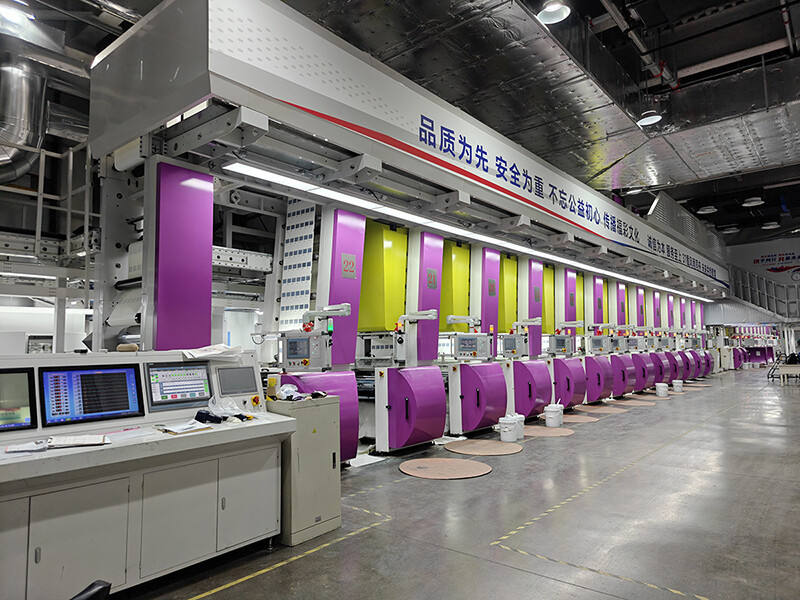
Why pre-printing matters in large corrugated runs
Pre-printing applies graphics to linerboard before the board is corrugated and converted. That changes both print quality expectations and line planning.
Compared with post-printing, the process can deliver sharper graphics, smoother solids, and better brand consistency on retail-ready transport packaging.
For high-volume orders, those advantages only hold when the machine maintains repeatability. A small drift in tension, drying, or impression quickly becomes a large waste issue.
That is why the Automatic corrugated box pre-printing machine is often evaluated as part of a production system, not as a stand-alone printer.
What the machine must do beyond printing fast
A suitable machine should print accurately at target speed, but it also needs to recover quickly after changeovers, cleaning, and job interruptions.
In practical terms, the equipment must control four areas at the same time: registration, color consistency, substrate handling, and uptime discipline.
If one of these areas is weak, the published maximum speed becomes less relevant. Output quality then depends on slowing the line or accepting more waste.
Registration and repeat accuracy
High-volume retail packaging often includes barcodes, fine text, and tight brand colors. Print repeat must remain stable across long production windows.
Servo control, web guiding, tension management, and cylinder precision all affect this result. Evaluation should focus on sustained accuracy, not only startup samples.
Ink transfer and drying stability
A strong Automatic corrugated box pre-printing machine should keep solids even and avoid dirty print at realistic production temperatures and humidity levels.
Drying capacity matters because under-cured ink affects lamination, corrugation, and later converting. Overheating can damage substrate behavior or increase energy cost.
Automation should reduce variability, not hide it
Automation is valuable when orders are frequent, repeatable, and time-sensitive. Still, not every automated feature creates the same operational gain.
Some features save setup time. Others protect print quality by reducing operator dependence. The strongest systems usually do both.
Functions that usually deserve closer attention
Automatic register preset linked to stored job parameters.
Closed-loop tension control across unwinding, printing, and rewinding.
Quick sleeve or cylinder change systems for shorter downtime.
Automated wash-up sequences that reduce cleaning inconsistency.
Remote diagnostics for fault tracing and service support.
Even so, the best Automatic corrugated box pre-printing machine should still allow clear manual intervention. A system that is hard to diagnose becomes risky during urgent production.
Look at the full line, not only the press
In packaging printing, pre-print quality must survive the next processes. That includes corrugation, die-cutting, slotting, folding, and stacking.
This is where machine selection connects to broader equipment knowledge. Flexographic printing capability alone is not enough if later conversion creates bottlenecks.
Operations dealing with mixed equipment portfolios, including second-hand die-cutting machines or additional finishing units, need compatibility checks early.
The same principle applies in plants handling paper bag printing machines and other printing equipment. Workflow discipline matters as much as single-machine performance.
Integration points worth checking
Reel size and handling compatibility with upstream and downstream logistics.
Drying and ink system suitability for later bonding and corrugation steps.
Data exchange with prepress, color management, and production scheduling tools.
Tolerance matching between print repeat and die-cutting registration.
How to compare options with fewer blind spots
A useful comparison process translates plant reality into measurable criteria. That means collecting real job data before reviewing machine proposals.
Order length distribution, SKU change frequency, board grades, target graphics quality, and acceptable waste rate should all be defined early.
Then compare each Automatic corrugated box pre-printing machine against those conditions rather than against brochure language.
A practical shortlist framework
Match print width, repeat range, and speed to the current order mix.
Check demonstrated performance on the same liner types used in production.
Measure setup waste, not only running waste.
Review cleaning time, job memory functions, and operator interface logic.
Confirm service structure, spare parts access, and upgrade path.
Estimate total operating cost across energy, consumables, labor, and downtime.
This approach often reveals that two machines with similar rated speed can behave very differently in real production economics.
Where long-term value usually comes from
The strongest return rarely comes from maximum speed alone. It usually comes from stable output, repeatable setup, and lower risk during demanding schedules.
An Automatic corrugated box pre-printing machine that supports standardized work can also improve planning confidence across the packaging printing line.
That is especially relevant where operations already manage flexographic printing machines, converting equipment, and mixed-age assets that must work together reliably.
The next step is usually to build a comparison sheet around actual jobs, sample substrates, and downstream constraints. Once those factors are visible, machine selection becomes more precise, and the final decision is easier to defend operationally.
Contact Us Today to Get a Quote
WhatsApp:+8613863655370
Tel:+8613863655370
E-mail:Chris@bochuanpack.com