
NEWS
High-speed milk packet printing machine: does speed always mean higher cost?
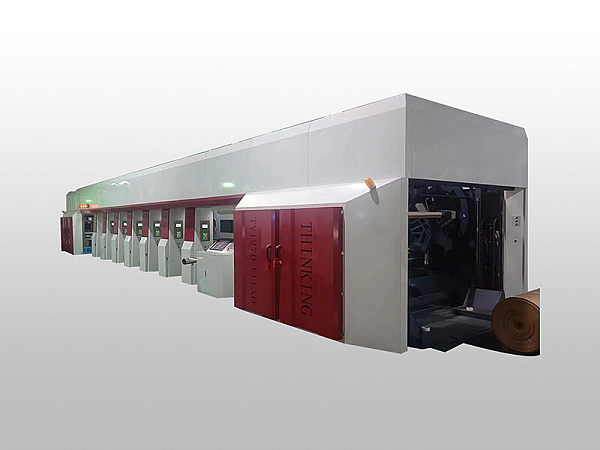
Understanding the Real Cost of High-Speed Milk Packet Printing Machines
In the fast-evolving packaging and printing industry, speed and efficiency are key drivers of production value. But when it comes to a high-speed milk packet printing machine, does higher speed inevitably mean higher cost? This article explores the real relationship between performance and price, covering High-speed flexographic printing machine price, milk packet printing machine price, and the technology upgrades in Flexo printing machine solutions to help businesses make smarter, cost-effective investment decisions.
Modern packaging lines often operate 16–24 hours per day to meet growing dairy product demand. Machinery capable of reaching 200–400 meters per minute is no longer rare, but rising operating speeds bring new questions about energy use, maintenance frequency, and ink consumption. Understanding how these elements interact helps purchasers determine whether investing in faster flexographic printing equipment truly delivers better ROI.
Speed vs. Cost: Breaking Down the Core Relationship
Speed undoubtedly affects production throughput, but its relationship with cost is not linear. In most cases, the cost of a milk packet printing machine scales with specific performance thresholds, such as the number of print stations, drying technology, automation level, and servo drive integration. A jump from 150 m/min to 300 m/min, for instance, can raise the purchase price by 25%–40%, primarily due to upgraded components rather than speed alone.
For businesses operating at medium capacity—say, producing 50,000–80,000 packets per day—a standard flexographic model operating at 180 m/min may offer a balanced return. Ultra-high-speed variants are most practical for lines exceeding 100,000 packs per day or when multi-layer substrate precision is critical.
Operational costs also evolve. Higher speeds demand inks with faster drying rates and stronger adhesion, increasing per-litre ink costs by roughly 8%–12%. Additionally, component wear accelerates, necessitating scheduled maintenance every 1,000–1,200 operating hours instead of every 1,500 hours on slower models.
Key Factors Influencing Machine Cost
Printing width (ranging 600–1600 mm depending on pack size)
Number of colors (4 to 8-color flexographic configurations)
Drying systems (UV vs. hot air, differing by 15–20% in energy cost)
Automation level (manual register vs. self-calibrating sensor systems)
Material compatibility (LDPE, PET, biodegradable films)
These factors together define whether a printer’s added speed translates into financial gain. Companies should measure cost per thousand impressions rather than upfront machine price to compare efficiency.
Technology Upgrades Shaping Flexographic Solutions
Recent advancements in flexographic printing minimize the traditional gap between speed and cost efficiency. Servo-driven systems now allow precise registration at ±0.1 mm, reducing film waste by up to 5%. Laser-engraved anilox rollers also improve ink transfer consistency, lowering ink usage by around 8% per production batch.
Integrated drying modules with variable temperature controls (ranging 60°C–120°C) reduce curing time without overheating milk film laminates. Moreover, IoT-enabled monitoring allows technicians to predict component wear 7–10 days before failure, cutting unscheduled downtime by nearly 20% annually.
As sustainability pressures grow, hybrid solutions—combining water-based inks with energy-efficient UV curing—are gaining favor. Although their setup cost is 15% higher, total operational savings in solvent recovery and air filtration can reach 10% within two years.
Decision Framework for Buyers and Evaluators
Procurement professionals, financial approvers, and technical managers need a systematic approach when evaluating high-speed milk packet printing equipment. Beyond sticker price, consider total cost of ownership (TCO) across at least a 5-year horizon. Critical factors include machine uptime ratio, consumables cost, operator training, and after-sales service availability.
A four-step assessment often works well:
Define production target volume (e.g., 70,000 vs. 120,000 packs per day).
Estimate print-to-maintenance ratio and annual running hours (typically 4000–6000 hours).
Compare TCO including consumables, energy, and spare parts over 5 years.
Negotiate service contracts offering on-site support within 24–48 hours.
Selecting equipment aligned with these parameters supports long-term plant efficiency and safety compliance. Technical evaluators should verify compliance with ISO 12647 and CE safety standards to prevent costly downtime or quality deviations during milk packet mass production.
FAQ: Practical Considerations Before Purchasing
How long does it take to install and commission a high-speed flexographic printing machine?
Typical installation requires 7–10 working days, with calibration adding another 2–3 days depending on plant layout and operator readiness. Complex lines with automatic die-cutting integrations can extend commissioning up to 15 days.
What are the most common maintenance challenges?
Ink drying systems and roller alignment are the two most maintenance-intensive areas. Operators should perform roller clearance inspection every 500 hours and ink chamber cleaning after each 8-hour shift to maintain print accuracy.
Are second-hand die-cutting machines compatible with new high-speed printers?
Yes, provided alignment and feeding interfaces match. A mechanical synchronization variance within ±0.2 seconds between machines ensures efficient integration. Refitted second-hand die-cutters often reduce total project budgets by 20%–25%.
What kind of after-sales support should buyers expect?
Reliable suppliers should offer 24-hour remote troubleshooting, on-site assistance within 48 hours, and guaranteed spare part delivery in 5–7 working days. A comprehensive service contract typically costs 3%–5% of annual equipment value but significantly reduces downtime risk.
Conclusion and Next Steps
High-speed milk packet printing machines do not automatically equate to excessive costs. Instead, costs reflect technology sophistication, material handling precision, and lifecycle efficiency. By focusing on TCO, energy efficiency, and predictable uptime, businesses can find balance between production speed and financial rationale.
Whether exploring high-speed flexographic printing machines, second-hand die-cutting equipment, or paper bag printing lines, assessing actual production goals and after-sales reliability ensures each investment supports long-term growth. For customized recommendations or detailed equipment comparisons, contact our technical consultants today to discuss solutions tailored to your production workflow.
Contact Us Today to Get a Quote
WhatsApp:+8613863655370
Tel:+8613863655370
E-mail:Chris@bochuanpack.com